
Blog
5 Ways Employer-Employee Relationship is Transforming Post the Pandemic

As the pandemic is resetting all the working trends, it’s having a major impact on work patterns previously thought of and envisioned as the most optimum viz, the ‘9-to-6’ office culture. In course, to navigate through pandemic situations, all organizations have to rethink workforce planning, management, and organizational strategies. Covid-19 has resulted in the most rapid transformation of the workforce. Employers are experiencing severe challenges in the midst of the country’s worst economic crises. To mitigate the risks, employers are taking different measures which have significantly affected employees.
Nowadays, working from home (WFH) has become a norm rather than an exception, with the increasingly accepted trend of work-profiles moving to a hybrid culture. This changed scenario has moved the employer – employer relationship towards digitizing mode at an accelerated pace never envisioned previously. Companies are at a crossroads: those that capitalize on post-COVID opportunities will find themselves in a good position to retain their talent and attract people when the situation stabilizes. By contrast, those that fail to change will be left behind, exposing their employees to increased risks of financial distress, layoffs and closures.

Employers and Employees : Redefined Relationship Dynamics
Employers and employees have experienced lots of challenges post-pandemic.The spread of COVID-19 in multiple waves has further aggravated such problems and resulting challenges. To overcome the challenges and improve relationships, employers are taking different measures which have significantly affected employees.
Remote working
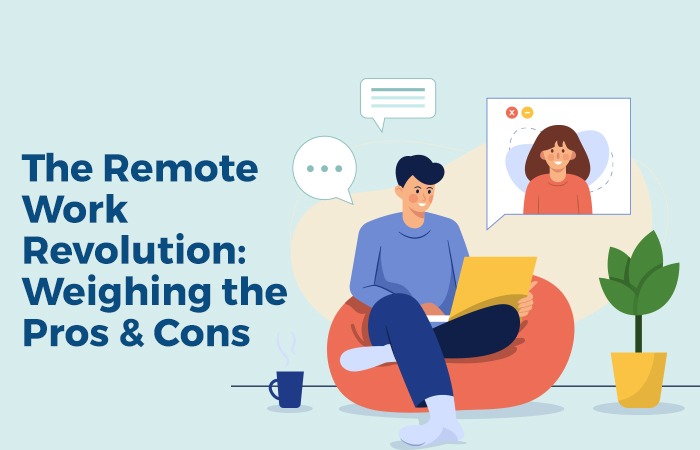
Most of the businesses have enabled remote working to enhance productivity and ensure the continuation of their business activities. However, shifting to remote working, either partially as part of the hybrid culture or totally as remote working, brings many challenges which might hamper organizations efficiency. From the government side also, not many clear guidelines and regulations have been issued to facilitate remote working. Remote working is an evolving practice, and surely, it seems, from observing and analyzing various different practices envisaged. different organizations, there may not be a “one size fit all” solution for this changed landscape of organizations.
Progressive enhancement of new skills
The number of skills, technical as well as soft skills, required for effectively doing a single job is increasing exponentially and new skills are replacing old ones. The need is necessitated by the lack of active collaboration between co-workers as part of remote working and hence more reliance on self-help-guides as such and organizations are placing a huge effort to create the resources and processes to enable employees to acquire new skills quickly . In a study done by a major staffing organization, about Twenty-nine percent of the skills that were present in an average job posting in 2018 will be obsolete by 2023 and will be replaced with other skill sets.
Varying Emotional Needs of Employees
An effective way to navigate these never-before-seen changes in the IT world landscape. Organizations need to build a more humane employer-employee relationship and employment offers that meet employees needs as being heard and valued. All HR leaders across HR sub-functions have a role to play in ensuring the employee value proposition (EVP) holistically centers employees as people and not just as resources.
Greater trust on employees with new responsibilities
Emergence of hybrid (work-from-home, aka WFH) culture is going to be successful only if employers start trusting employees in a greater way and establish new expectations based on greater trustworthiness with well-defined responsibilities and accompanying accountabilities. Employees do feel empowered with new responsibilities even as organizations scramble to meet the challenges of the pandemic, and these new trust equations can work wonders in the form of employee increments in productivity with a much lesser amount of regular hand-holding. This may include taking on add-on managerial duties when supervisors were overloaded with additional work to lead new initiatives, and being asked to mentor coworkers because of their existing expertise, or their experience with remote work.
Mounting pressure on diversity, equity and inclusion
Along with expectations of greater empathy and a more humane work environment, there is increasing pressure on employers to improve equity and inclusion within organizations. In particular, there is mounting pressure from all of HR’s stakeholders — internally and externally — to make real progress on diversifying leadership.
With the onset of remote working, the current challenges posed by the pandemic can be seen as the circumstances that present a unique opportunity for organizations to shape the future of work in ways not previously considered a possibility and a win-win for both employees and employers.
Flexi Ventures is one of the fastest growing IT staffing companies in India. Connect with our expert recruiters to help you with your IT staffing needs. Visit www.flexiventures.in for more information on staffing and recruitment.